
Lash Allergy Symptoms: Signs to Watch For

A refill should leave you looking polished, not wondering why your eyelids feel tight, itchy, or unusually swollen. Lash allergy symptoms can be easy to dismiss at first, especially when mild redness or tenderness appears after a long appointment. Knowing the difference between expected short-term sensitivity and a possible reaction helps protect both your eye comfort and the health of the delicate skin around your eyes.
Lash extensions involve more than the extensions themselves. Adhesive, under-eye pads, tape, cleanser, primer, and removal products may all touch or sit close to sensitive skin. A reaction does not automatically mean someone did anything wrong, but it does mean it is time to pause and assess rather than schedule another refill.
What Lash Allergy Symptoms Can Look Like
An allergy is an immune response, often called allergic contact dermatitis when it affects the skin. Symptoms may begin during the appointment, but they more commonly develop several hours later or the next day. They can also become more noticeable after repeat exposure to an ingredient.
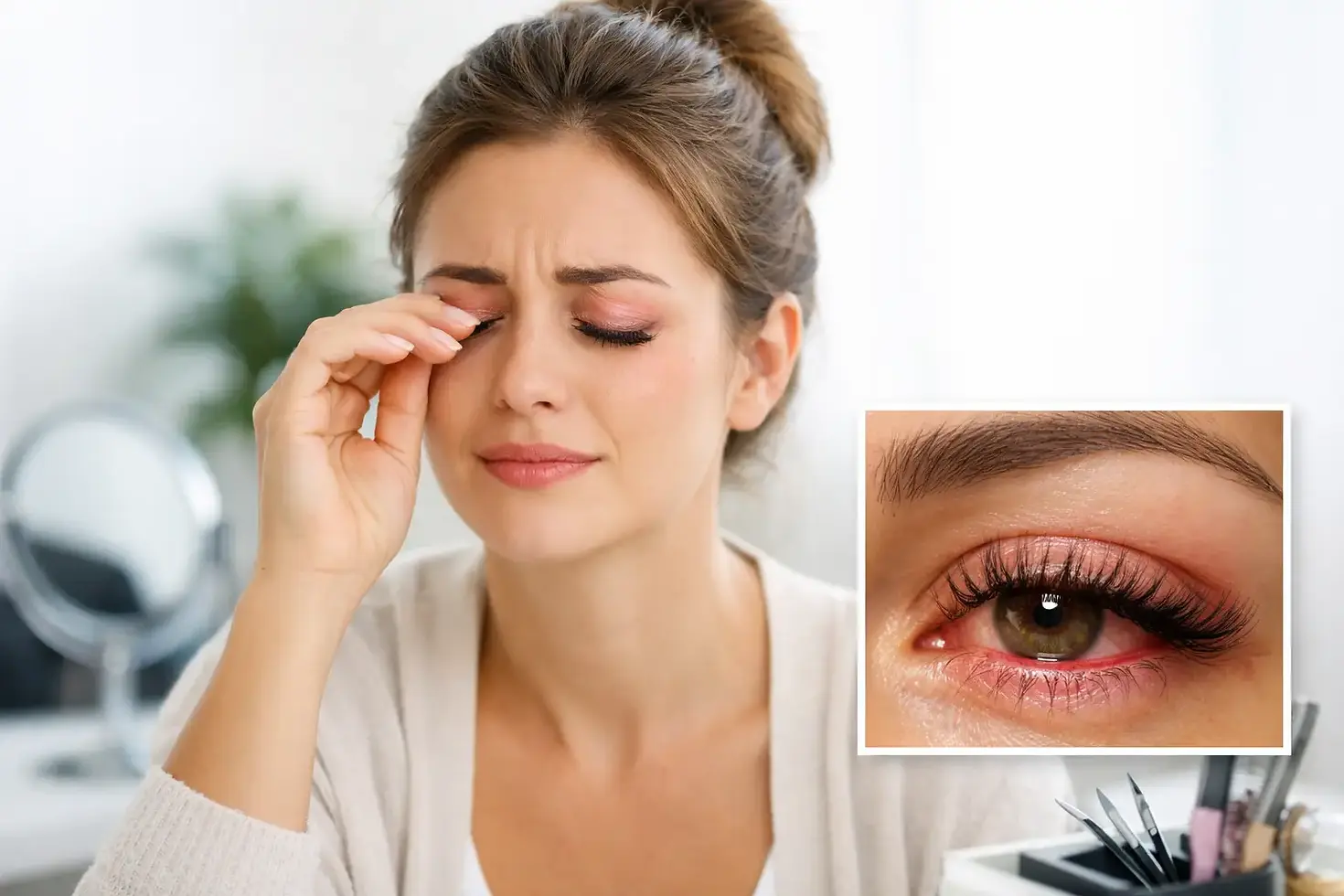
Common signs include persistent itching, redness along the lash line or eyelids, swelling of one or both eyelids, watery eyes, dry or flaky skin, and a burning or stinging feeling that does not settle. Some clients notice puffy lids when they wake up the morning after an appointment. Others develop a rash-like texture or tenderness around the eyes.
The pattern matters. A true allergy often affects both eyes because both sides were exposed to the same products, although it can still appear more strongly on one side. Itching and swelling are especially common with allergic reactions. Symptoms can last longer than ordinary post-service sensitivity and may worsen over 24 to 48 hours.
Irritation is not always an allergy
Not every uncomfortable experience is an allergy. Irritation can occur when fumes from adhesive reach the eye area, when the eyes are not fully closed during application, or when tape or pads pull against delicate skin. This type of reaction may cause tearing, red eyes, or stinging right away. It often improves once the exposure stops and the area has time to recover.
Mechanical irritation is another possibility. A lash that twists, a set that feels heavy, or extensions that contact the eyelid can create localized discomfort. Redness in the white of the eye, a scratchy sensation, or discomfort mainly on one side may point more toward irritation than an allergic skin response.
The distinction is useful, but it is not a reason to self-diagnose. The eye area is sensitive, and several issues can look similar at the start. A qualified medical professional can help determine whether the concern is allergy, irritation, infection, or another eye condition.
When Swelling Needs Prompt Medical Care
Some symptoms are not appropriate to monitor at home. Seek urgent medical evaluation if you experience any of the following:
Trouble breathing, wheezing, facial swelling beyond the eye area, or swelling of the lips or tongue
Eye pain, significant light sensitivity, changes in vision, or an inability to open the eye
Thick discharge, increasing warmth, or redness that continues to spread
Severe swelling, rapidly worsening symptoms, or symptoms that do not improve after the suspected product is removed
These signs may indicate a more serious reaction or an eye concern that needs timely treatment. Do not try to push through a lash appointment, cover the area with makeup, or wait for a scheduled refill if your symptoms are escalating.
What to Do If You Suspect a Reaction
First, stop using any new eye-area products, including lash cleanser, eye makeup, mascara, and growth serums, until the irritation has been evaluated and fully resolved. Adding multiple products can make it harder to identify the trigger and may further inflame the skin.
Contact your lash provider promptly and describe when symptoms began, what you are feeling, and whether there are changes in vision or eye pain. Clear photos taken in natural light can also be helpful for tracking swelling and communicating what has changed. If extensions need to come off, professional removal is generally the safer choice. Do not pull, pick, or attempt to dissolve adhesive at home, as this can damage natural lashes and irritate the eye area further.
A cool, clean compress may feel soothing for mild external eyelid discomfort. Avoid applying medicated creams, essential oils, or prescription products near the eyes unless a clinician specifically directs you to do so. Steroid creams and eye drops are not interchangeable, and the wrong product around the eye can create additional risk.
If symptoms are more than mild, persist beyond a short period, or return after each appointment, consult an eye care professional, dermatologist, or other qualified medical provider. Their guidance should take priority over beauty maintenance.
Why Reactions Can Happen After Previous Comfortable Sets
It is frustrating when a client has worn extensions for months or years without a problem and suddenly reacts. Still, prior tolerance does not guarantee permanent tolerance. Allergic reactions can develop after repeated contact with an ingredient. A client may also encounter a changed formula, a different prep product, a new cleanser, seasonal eye sensitivity, or a compromised skin barrier from unrelated skincare use.
This is why a careful service history matters. Before another appointment, consider recent changes such as new skincare, eye products, medications, seasonal allergies, or a previous episode of swelling. Share that history openly. A polished result is never worth ignoring a reaction pattern.
Can a patch test guarantee safety?
No. A patch test may offer limited information in certain situations, but it cannot reliably guarantee that you will not react during a full lash application. The exposure amount, timing, and placement near the eyes are different. For clients with a prior suspected adhesive allergy, re-exposure can provoke another reaction, sometimes more quickly or intensely.
The safest next step depends on your symptoms, medical history, and the product involved. It may mean discussing alternatives with a clinician and your provider rather than assuming a different adhesive will solve the problem. Transparency is part of safe, personalized esthetic care.
Reducing Avoidable Lash Sensitivity
While allergies cannot always be prevented, good application practices can reduce avoidable irritation. Arrive with clean lashes and avoid introducing new eye products immediately before an appointment. During the service, keep your eyes comfortably closed and speak up if you feel burning, excessive tearing, or if a pad is pinching. Discomfort is not something you need to tolerate for the sake of a finished set.
Choose a provider who prioritizes consultation, clean technique, product awareness, and client communication. At Brows & Esthetics San Diego, that standard means treating your comfort and service history as part of the appointment, not an afterthought. If you have had a previous reaction, disclose it before booking so the service can be assessed appropriately.
After an appointment, follow your provider's aftercare guidance and avoid rubbing your eyes. Gentle handling supports both retention and comfort. If something feels distinctly different from normal - especially itching, swelling, or worsening redness - contact the provider early instead of waiting for your next scheduled visit.
Beautiful lashes should feel as good as they look. When your eyes signal that something is wrong, listening early is the most confident form of self-care.


Comments